
Nonprofit Storytelling Guide: How to Share Your Mission and Inspire Action
Key Takeaways
• Nonprofit storytelling communicates mission and impact through real people and lived experiences rather than programs or statistics alone.
• Stories build trust and emotional connection, making complex social issues easier to understand and remember.
• Effective nonprofit stories follow a clear structure: context, challenge, and change.
• Combining human stories with supporting data strengthens both empathy and credibility.
• Ethical storytelling preserves dignity, highlights resilience, and requires consent and respectful representation.
Nonprofits exist to create change, but that change is not always easy to explain. With limited time, small teams, and tight budgets, many organisations struggle to communicate their mission in a way that truly connects with donors, volunteers, and the communities they serve.
This is where nonprofit storytelling becomes essential.
Nonprofit storytelling is not about dramatic language or emotional appeals for their own sake. It is about sharing real experiences in a clear, respectful way so people understand why your work matters and how they can be part of it.
When done well, storytelling helps nonprofits build trust, increase visibility, and inspire action without relying on large marketing budgets.
What is Nonprofit Storytelling
At its simplest, nonprofit storytelling is the practice of communicating your mission and impact through real people, real situations, and real outcomes.
Instead of leading with programs, services, or statistics, storytelling focuses on the human experience behind your work. It shows what life looked like before support was available, what challenges existed, and what changed because of your organisation’s involvement.
Good nonprofit storytelling answers one core question for the reader:
Why does this matter?
By grounding your message in lived experience, your mission becomes easier to understand, remember, and support.
Why Storytelling Is Important for Nonprofit Organizations
Nonprofits are constantly competing for attention and trust. Stories help cut through noise by making your work feel human rather than abstract.
Stories are effective because:
people remember stories more than explanations
stories create empathy and emotional connection
stories help supporters see their role in the impact
This is why nonprofit storytelling is one of the most effective ways to boost nonprofit visibility. When people connect with a story, they are more likely to share it, talk about it, and stay engaged over time.
Storytelling works best when it is part of a broader digital approach. Thinking about how to market a nonprofit organization often means viewing storytelling alongside other practical efforts that support reach, visibility, and impact when resources are limited.
Why Stories Work Better Than Stats Alone
Data plays an important role in nonprofit communication, but numbers alone rarely inspire action.
Statistics can inform people, but stories help them feel something.
For example, saying that hundreds of families received support provides useful context. Pairing that information with a short story about one family helps supporters understand what those numbers actually mean in real life.
The most effective nonprofit messaging combines both:
stories to build connection
data to reinforce credibility
The Core Elements of a Strong Nonprofit Story
Strong nonprofit storytelling follows a clear and repeatable framework. It does not rely on creativity alone, but on intention, structure, and respect for the people involved.
Be Clear About the Purpose of the Story
Every story should begin with intention. Before sharing a story, decide what you want it to achieve. This could be raising awareness, encouraging donations, inviting volunteers, or showing impact.
A clear purpose guides how the story is written and where it is shared.
Create a Simple and Logical Story Flow
Effective stories move naturally from context, to challenge, to change.
Start by grounding the reader in the situation. Introduce the person, group, or community at the center of the story and explain what circumstances looked like before support was available.
Next, describe what made the situation difficult. Show the barriers, limitations, or struggles that needed to be addressed.
Finally, show what shifted. Highlight progress, learning, or improvement, even if the change is small. Clear movement gives the story meaning.
Focus On One Main Character
Strong stories centre on a single person or group. This keeps the narrative focused and easier to follow.
Whenever possible:
Include personal details that create relatability
Use direct quotes or testimonials
Let the story be told from the individual’s perspective
This approach preserves authenticity and avoids abstraction.
Know Who the Story Is For
Different audiences connect with stories in different ways.
Donors often look for impact and accountability. Volunteers want purpose and involvement. Community members want representation and respect.
Deciding who the story is for helps shape the tone, detail, and call to action. The same experience can be framed differently depending on the audience and platform.
Communicate Challenges, Goals, and Progress With Care
Every meaningful story includes a challenge, but it is important to avoid portraying people as helpless or passive.
Explain what the character was facing and why it mattered, while also highlighting resilience, effort, and agency. This creates dignity and hope rather than guilt.
Show clear goals and progress so supporters understand how your organisation helped move things forward.
Add Visuals and Imagery to Strengthen the Story
Visual elements help stories feel more real and memorable. Photos, short videos, simple infographics, or even hand-drawn visuals can reinforce the emotional and factual parts of a story.
When using visuals:
choose images that reflect real people and moments
avoid overly staged or stock-heavy visuals
use before-and-after visuals where appropriate to show change
Visual storytelling should support the narrative, not distract from it. The goal is to help the audience better understand and remember the story being told.
Include a Clear Call to Action Within the Story
A strong nonprofit story should always guide the reader toward the next step. Without a clear call to action, even the most compelling story can lose momentum.
The call to action should feel like a natural continuation of the story, not a separate or sales-focused message. It helps supporters understand how they can participate in the change they just read about.
Effective calls to action are specific and focused. Rather than offering multiple options at once, invite the reader to take one meaningful step, such as donating, volunteering, sharing the story, or learning more about the cause.
Putting Nonprofit Stories Into Action
Once a strong story is created, the next step is making sure it is shared clearly, ethically, and in the right context.
Decide Where and How the Story Will Be Shared
Stories can appear across many channels, including websites, emails, social media, campaigns, newsletters and videos.
Nonprofit video storytelling is especially effective for communicating emotion quickly, but written stories can be just as powerful when they are focused and clear.
Choosing the right format and platform helps the story feel natural rather than forced.
Highlight the Outcome and Invite Action
Every story should leave the audience with a clear takeaway. Show what changed between the beginning and the end of the story.
From there, invite the audience to take the next step. The call to action should feel like a continuation of the story, not a hard sell. Keep it simple and focused.
Review Before Sharing
Before publishing, review the story to ensure it reflects the experience honestly, respects the people involved, and aligns with your mission.
Editing is about clarity, integrity, and alignment, not perfect language.
Real-World Nonprofit Storytelling Examples and Why They Work
Many nonprofits already use storytelling effectively, and there are clear patterns worth learning from.
Some organisations focus on individual stories rather than broad issues. This helps supporters connect emotionally without feeling overwhelmed. Others combine short narratives with visuals to show impact quickly and clearly.
What strong examples have in common is focus. They centre on one story, communicate a clear challenge and outcome, and invite supporters into the next chapter rather than positioning the organisation as the hero.
Studying these approaches can help nonprofits see how storytelling works in practice, not just in theory.
Below is the first real-world example, broken down to show exactly how strong nonprofit storytelling principles are applied in practice.
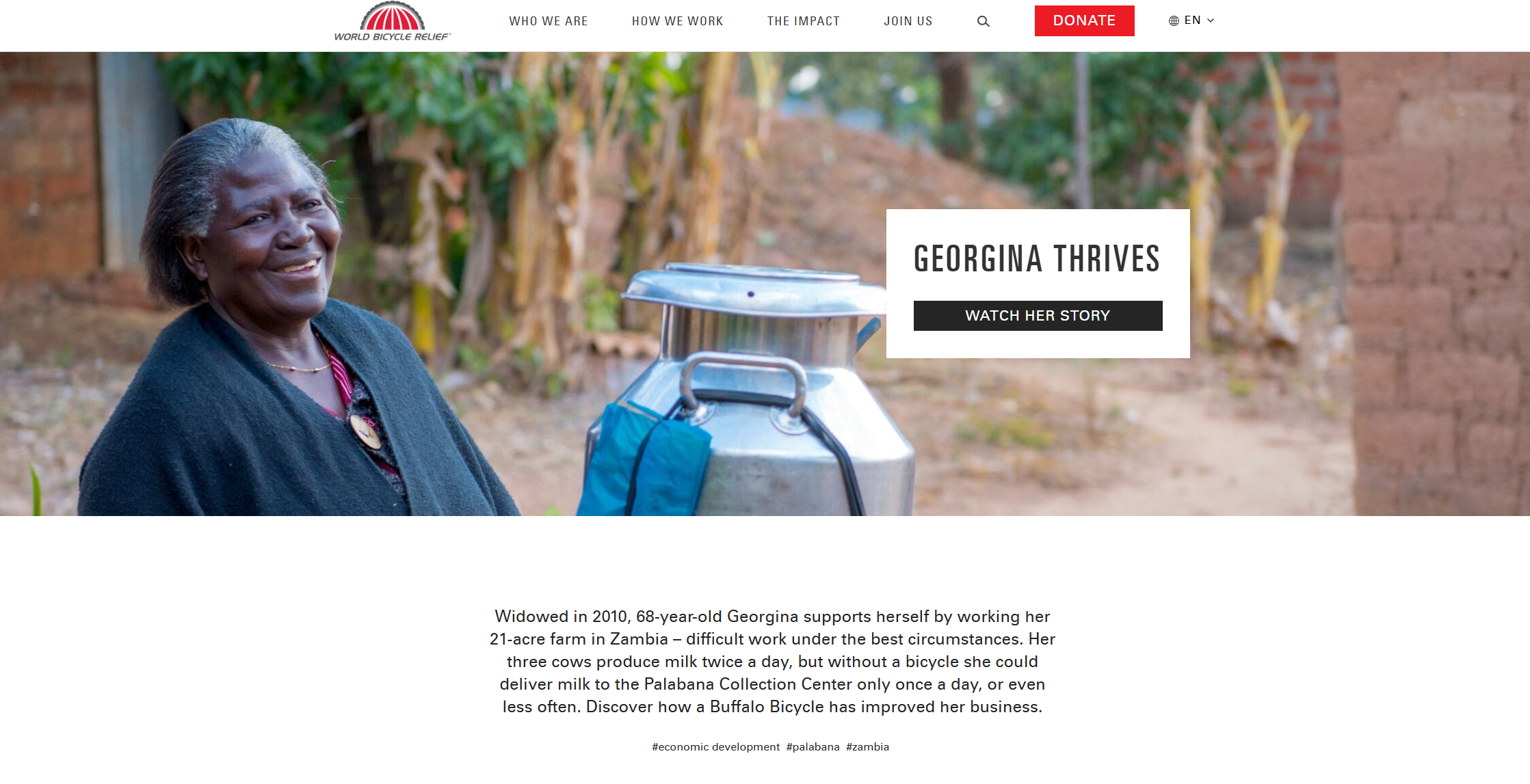
1. World Bicycle Relief: Georgina’s Story
Organisation: World Bicycle Relief
Format: Short documentary-style video and supporting web story
Primary audience: Donors and supporters interested in economic development and sustainable impact
Context
Georgina Situmbeko is a dairy farmer in Zambia and a member of the Palabana Dairy Cooperative. Widowed in 2010, she supports herself by working her 21‑acre farm and delivering milk to a collection centre up to 17 kilometres away over rough roads.
Challenge
Without reliable transport, Georgina could only deliver milk once a day, even though her cows produced milk twice daily. Carrying milk by hand or wheelbarrow often led to spoilage, limiting her income and wasting effort.
Change
With a Buffalo Bicycle, Georgina now delivers milk twice a day without missing a delivery. Faster transport reduces spoilage, increases income, and allows her to work independently and with confidence.
Why This Story Works
This campaign succeeds because it clearly follows a context-to-challenge-to-change structure. It focuses on one individual rather than a broad issue, making the impact tangible and easy to understand.
The story avoids portraying Georgina as a passive recipient of help. Instead, it highlights her effort, resilience, and agency. The bicycle is shown as a practical enabler, not a miracle solution. Visual storytelling strengthens the message by showing Georgina in her real environment, allowing viewers to see the difference the intervention makes. Concrete details, such as distance travelled, delivery frequency, and income impact, reinforce credibility without overwhelming the emotional narrative.
The call to action is implicit but clear: supporting World Bicycle Relief helps more farmers like Georgina improve their livelihoods in sustainable ways.
This example demonstrates how effective nonprofit storytelling combines human focus, clear structure, respectful representation, and practical outcomes to inspire trust and action.
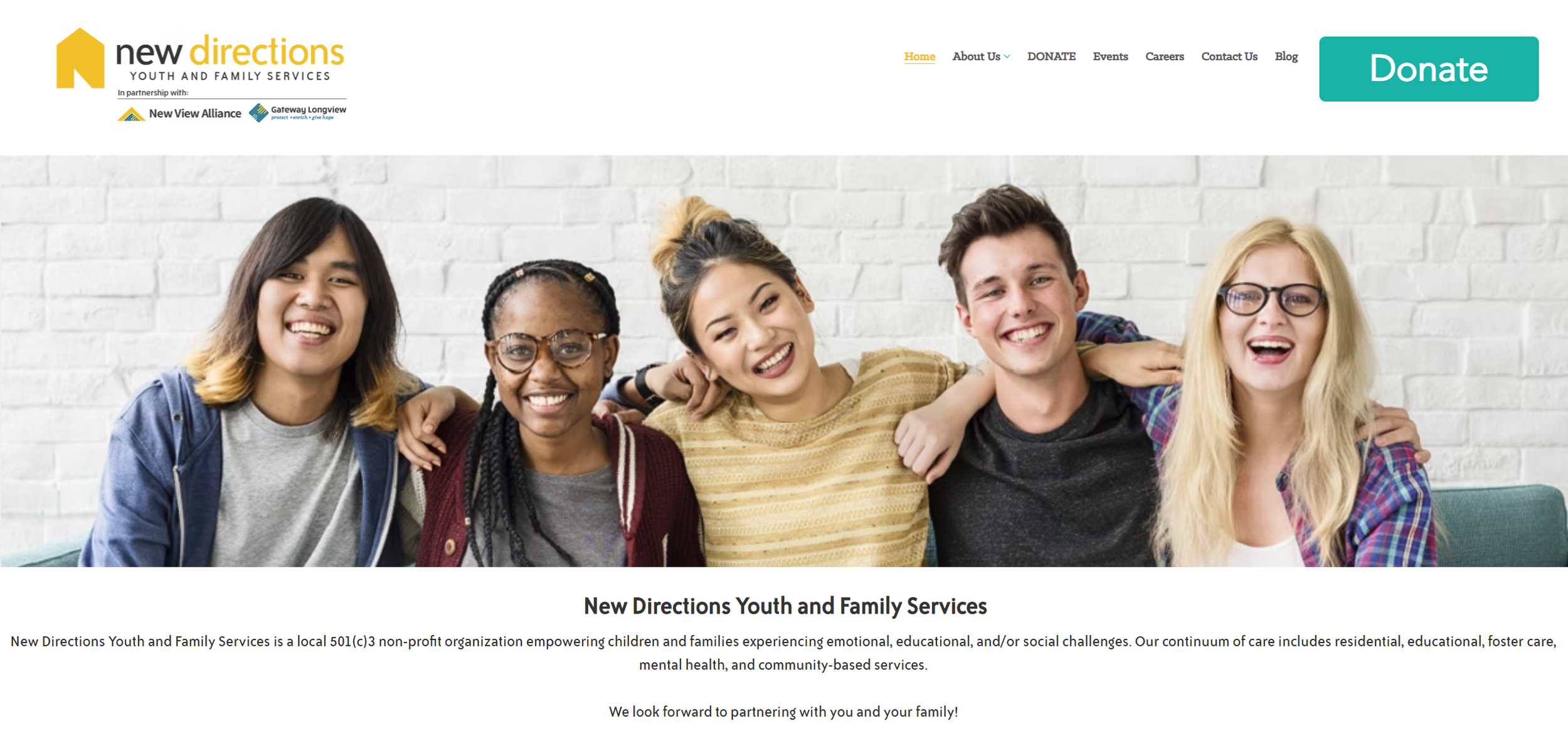
2. New Directions Youth and Family Services: Reconnecting Through Personalised Storytelling
Organisation: New Directions Youth and Family Services
Format: Personalised donor newsletters
Primary audience: Lapsed donors and long-term supporters
What the Campaign Did Well
Rather than relying on statistics or generic organisational updates, New Directions centred its newsletters on real success stories. One featured story followed Shayenne, a young person who overcame addiction and found sobriety through adventure recreation, including skiing. The organisation deliberately prioritised lived experience over industry language.
Core Elements Highlighted
This campaign shows the power of human-centred storytelling. By focusing on one identifiable person and a clear personal transformation, the story felt real and relatable. The messaging avoided jargon and metrics, instead letting supporters connect emotionally with a specific outcome.
Why This Works
Supporters want to hear how real people’s lives change, not abstract reports. This approach led to measurable results: 113 donations totalling $10,531 compared to 40 gifts totalling $5,809 the previous year, with nearly half coming from donors who had not given in 10 to 20 years. One legacy story even inspired a five‑figure gift. The campaign worked because it replaced statistics with stories and made impact personal again.
3. Philly PAWS: Visual Storytelling Around a Timely Moment
Organisation: Philly PAWS (Philadelphia Animal Welfare Society)
Format: Photo-led social media content
Primary audience: Local supporters and online followers
What the Campaign Did Well
Philly PAWS relied on strong, authentic visuals to tell its story. Rather than long explanations, the organisation used real photos and short videos of animals in care, often tied to timely moments such as major local or cultural events. These visuals immediately communicated emotion and urgency without needing heavy text.
Core Elements Highlighted
Use of timely visuals: By pairing compelling images with a moment (like Super Bowl buzz), the campaign met supporters where they already were online and encouraged more shares and engagement.
Human‑centered imagery: Photos focused on real animals and candid moments that evoke empathy and connection, making the cause feel immediate and real instead of abstract.
Simple, memorable storytelling: Instead of relying on long paragraphs or statistics, the visuals told a quick, emotional story that viewers could absorb in seconds — which is ideal for social media attention spans.
Why This Works
This campaign succeeds because it uses visuals as the story’s engine, not just as decoration. A powerful photo paired with a smart caption can trigger empathy and curiosity instantly, especially during an event when audiences are already engaged online. For small‑ and mid‑sized nonprofits with limited budgets, this shows how you don’t need high‑tech production to make a visual impact, you just need the right imagery, timing, and emotional context.
Common Nonprofit Storytelling Mistakes to Avoid
Even well-meaning organisations can struggle with storytelling.
Common pitfalls include:
trying to tell one story for everyone
relying on dramatic language instead of clarity
sharing stories without proper consent
focusing only on success and ignoring complexity
Another common issue is inconsistency. Storytelling should be an ongoing practice, not something used only during campaigns.
Ethical and Respectful Nonprofit Storytelling
Ethical storytelling is especially important in the nonprofit sector.
Stories should never remove dignity or exploit vulnerability. Focus on strength, resilience, and agency rather than portraying people as problems to be solved.
Always seek consent and represent experiences as they were shared, not reshaped to fit marketing goals.
Ethical storytelling builds trust with both supporters and the communities you serve.
Tell us your Story
Nonprofit storytelling is not about polished language or perfect messaging. It is about sharing real experiences in a clear and respectful way.
When stories are intentional and human, they help people understand why your work matters and where they fit into it. Over time, this builds trust, strengthens relationships, and turns interest into action.
If you are thinking about how your stories fit into your wider work, tell us your story. For those exploring strategic marketing planning, our services page offers more context on how we support organisations in this work.
